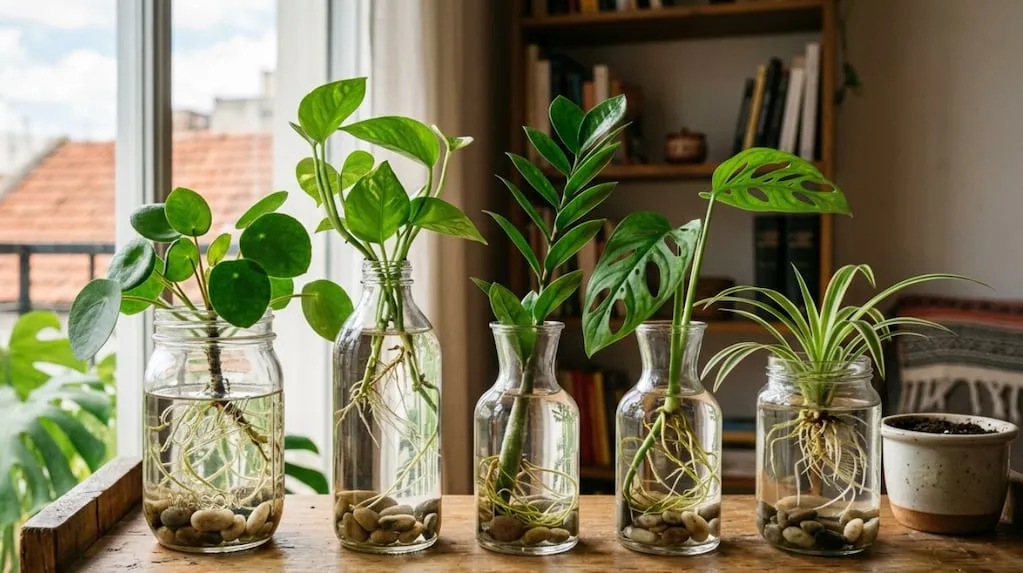
Pothos: The Tough Climber
Pothos (Epipremnum aureum) is a common choice for home growers. It tolerates a wide range of indoor conditions, which makes it suitable for beginners. It’s a hardy plant that often becomes a regular in many homes.
To grow Pothos in water, place a cutting in a clean container of water and position it where it receives indirect light. Change the water every 7 to 10 days to keep things healthy. Pothos care is referenced in research on indoor plants for its ability to take up certain airborne compounds. Its versatility and appearance make it suitable for many rooms.
Lucky Bamboo: A Calm, Modern Accent
The Lucky Bamboo (Dracaena sanderiana) has a sleek, modern look and is sometimes associated with positive energy. Its minimalist style fits contemporary decor, and it works well in small areas where you want a neat touch of green.
When growing Lucky Bamboo in water, use filtered or rested water to avoid excess chlorine (let tap water sit for a few hours so chlorine can dissipate). Make sure the roots stay submerged and keep the plant out of direct sunlight. These steps make Lucky Bamboo easy to grow in water.
Spider Plant: The Laid-Back Grower
Spider Plant (Chlorophytum comosum), sometimes called the “Ribbon plant” or “malamadre,” spreads readily and is easy to maintain. Its arching leaves suit a shelf or hanging basket, and its baby shoots, or “pups,” root easily in water.
Keep the water fresh by changing it often and place the plant where it receives indirect light. Like Pothos, the Spider Plant appears in studies on indoor air purification, though those effects are modest compared with proper ventilation. Its easy care and appearance explain why it’s common in many households.
Care Tips and Recommendations
To keep water-grown plants healthy, change the water regularly to avoid bacterial growth and odors. Clean containers to prevent fungal problems, and use clear glass so you can monitor root development. For water quality, let tap water rest for a few hours before using it, or use filtered water. Light matters: avoid direct sun, but make sure plants get enough indirect light so leaves don’t fade or growth slow down.
Common mistakes include skipping water changes, placing plants in very dark spots, and using water with high chlorine levels, all of which can harm plant health. If roots turn discolored or soft, clean them and replace the water right away.
These plants combine decorative appeal with a modest contribution to indoor air quality. They are not a substitute for fresh air, but they add visual interest and a calming presence to the home.