Tough Conditions and Past Failures
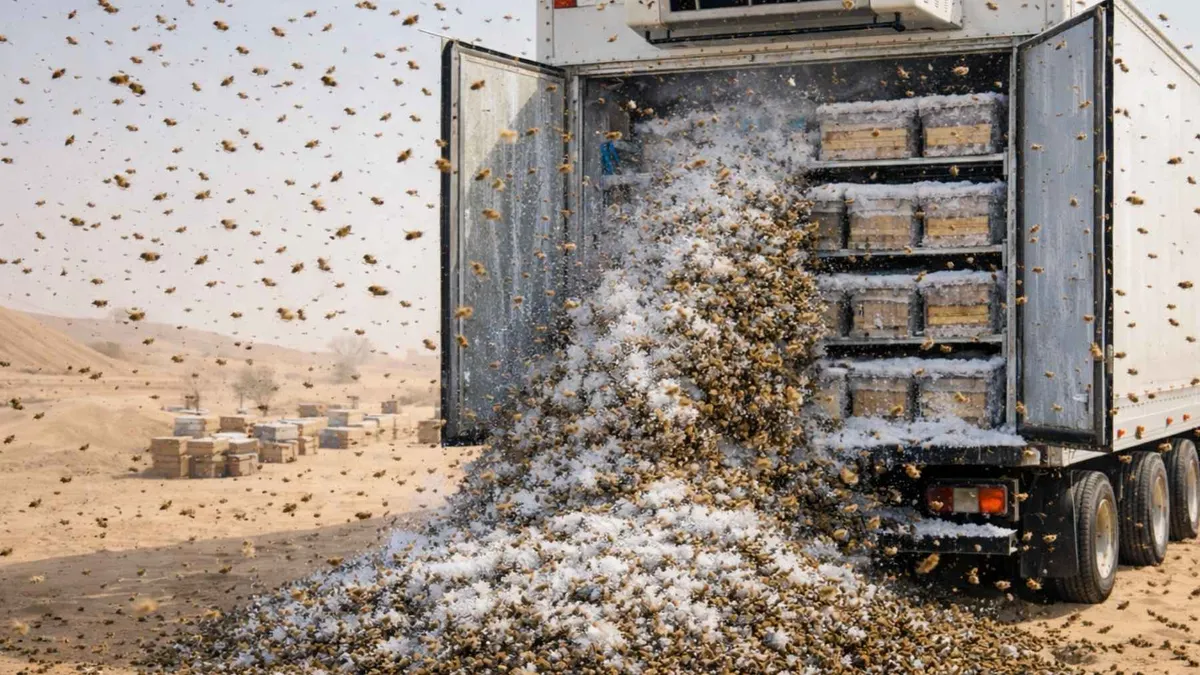
The Sahara Desert brings extreme heat, with sand temperatures topping 122°F (50°C) or higher. Heat can soften wax and damage delicate tissues; it contributed to the failure of an experiment that shipped refrigerated hives containing millions of bees.
Outside the Sahara, the Sahel region, including Burkina Faso, Niger, and Mali, saw mass tree-planting efforts fail when seedlings died because the soil couldn’t hold rainwater. The surface had crusted over, stopping water from soaking in and preventing young trees from getting a foothold.
Half Moon Pits: A Simple Fix That Works
Half moon pits have emerged as an effective earthwork. These shallow, crescent-shaped basins (typically 6.6 to 13 feet across and 8 to 16 inches deep) are placed with their open side facing uphill to catch runoff. That setup helps water pool and soak deeper into the ground, creating small spots that stay several degrees cooler than the surrounding sand.
Local communities, farmers, and land-restoration programs across Northern Nigeria have adopted these structures. Adding manure or compost to the pits boosts soil fertility and speeds up recovery. With agricultural land degradation affecting more than 60% of sub-Saharan African terrain, the better water infiltration (up to 70% more than untreated land) and reduced soil erosion from half moons can help revive degraded areas.
Proof It’s Working: And What Policymakers Are Saying
The Great Green Wall initiative, a global effort to protect soils, aligns with the use of half moon structures. The Food and Agriculture Organization (FAO) praises these “demi-lune structures” as a fast, straightforward way to improve semi-arid rangelands, and the United Nations Convention to Combat Desertification (UNCCD) also recommends them.
A 2025 case study in Northern Nigeria looked at the use of four-meter-wide half moons and found higher soil moisture and marked vegetation recovery after the rainy season. The study’s authors urged that half moon water harvesting be included in national climate and land policy frameworks because it is viable and can be adapted at the community level.
What Half Moons Actually Do
Beyond measurable environmental results, half moons create safe spots for life to return. Inside the pits, lower evaporation lets tough grasses, insects, birds, and eventually native trees come back. Fixing how water and soil interact first, before introducing biological interventions like trees or bees, has been an important lesson from these efforts.
This approach is simple: you don’t always need high-tech solutions. Working with natural processes and combining efforts from local communities, farmers, and international organizations can produce practical, sustainable, and scalable results in the fight against land degradation.