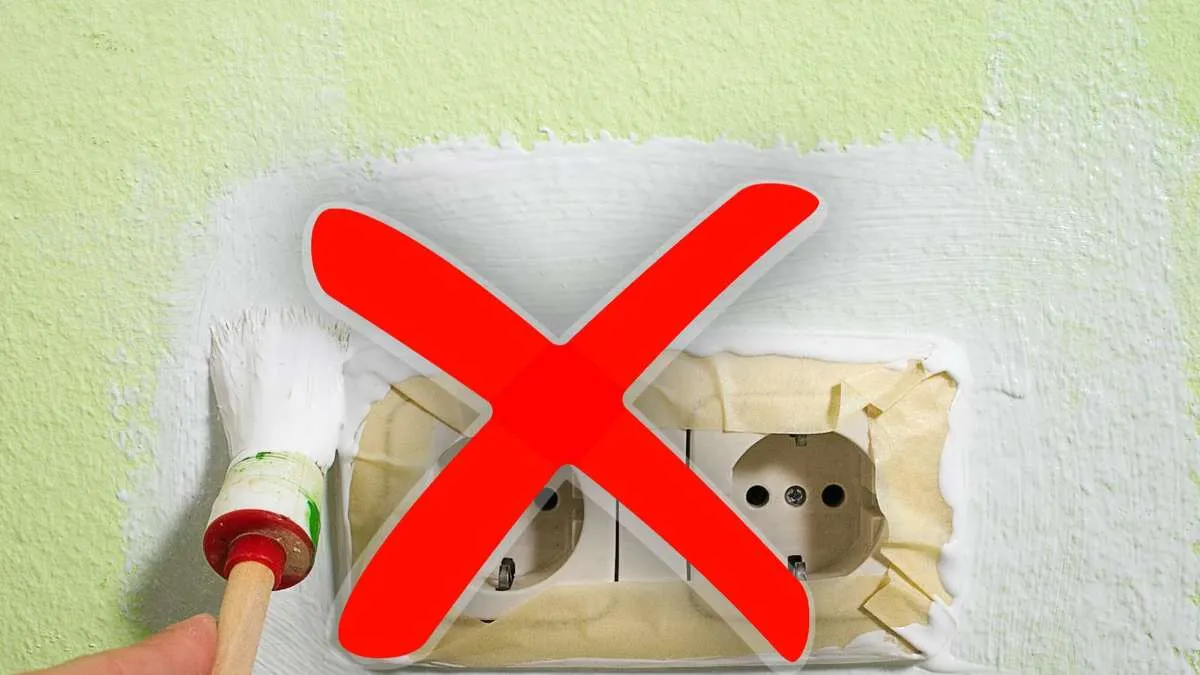
Why Cutting-In Changes the Way We Paint
“Cutting-in,” used in Japan, employs an angled-edge brush to paint crisp lines right along edges; no tape needed. The best brushes have an angled cut and synthetic-fiber bristles that help form a clean line as you run the brush along trim or corners. You need to watch how much paint you load on the brush; too much and you’ll get drips and smears. The method relies on smooth, steady strokes to produce a neat finish and avoid problems that can come from tape, like torn paint or ragged edges.
Compared with traditional masking-tape methods, Cutting-in is faster and avoids mistakes that happen when tape is removed poorly (like uneven edges or paint being pulled off the wall). Professional painters often use this technique; it reduces the time required for a job while maintaining quality.
Pick the Right Tools and Use the Right Moves
For Cutting-in to work well, the right gear matters. Use a high-quality angled-edge brush with slanted synthetic bristles for precision, and pair it with a good roller with the right nap for larger wall areas. For smooth walls, use a roller nap of 0.24 to 0.35 inches; for rough surfaces, use 0.47 to 0.59 inches to help avoid splattering.
To keep the color consistent, mix all the paint cans into one bucket before you start so you don’t end up with shade differences. Painting “wet-in-wet” is another pro tip; do transitions while the previous section is still wet so you don’t get visible lines. Using the “cross-stroke method” (apply paint in W-shaped passes, then smooth toward natural light) helps create an even finish. Also, turn off heating during painting; fast drying can cause uneven surfaces.
Get the Surface and Paint Ready
Good prep is what makes paint stick and last. Make sure surfaces are cleared of loose paint, dust, and grease stains, since these prevent proper adhesion. For materials like gypsum board (drywall), apply a deep primer first to avoid flaking and to keep the finish looking good after it dries.
When masking tape is unavoidable for small details, there are ways to improve the result. Put a thin base coat over the tape to seal its edge so the topcoat won’t bleed underneath. After the final coat, wait 20 to 30 minutes; the paint should be slightly moist, not wet; then remove the tape slowly at a 45-degree angle with a steady pull.
Why Cutting-In Is Worth Learning
The time savings with Cutting-in are significant. In a room of 215 square feet (20 square meters), masking and taping can stretch the job from four to eight hours, plus extra time for applying and removing tape. With Cutting-in, the same work can take only three to five hours of active work, almost cutting total time in half. The method streamlines the process and is more efficient and resource-friendly.
For homeowners doing DIY projects and for professional painters alike, adopting this Japanese technique can change how painting gets done: faster, neater, and less wasteful.