An Unprecedented Find
The dive took place near Cairns, in Far North Queensland, Australia, inside the Great Barrier Reef. The exact site is being kept secret to protect the habitat, but the details have been passed to the Great Barrier Reef Marine Park Authority (GBRMPA). The location is described as “tidally dominated” (meaning strong tidal currents), which makes it harder to explore and likely explains why it went unnoticed until now.
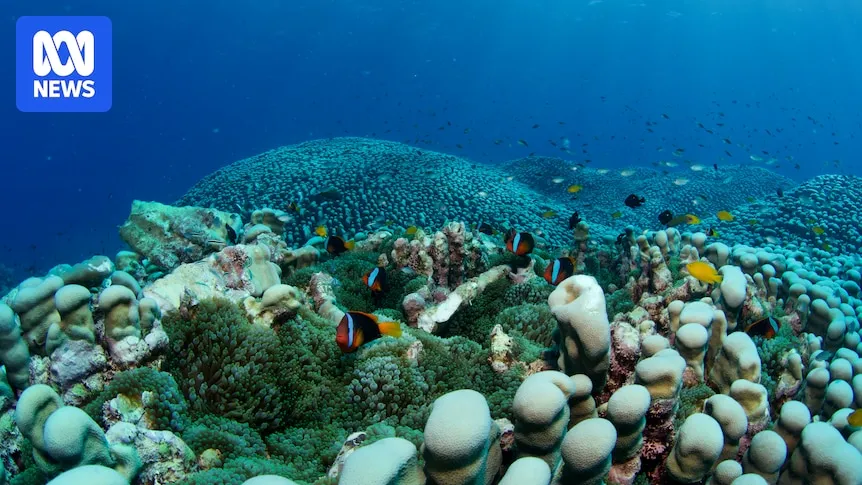
The colony stretches about 111 meters long with a footprint of 3,971 square meters. Initial measurements were taken with drones and measuring tapes and later turned into a detailed 3D model. That mapping was done in January when Sophie returned with the charity team after their first exploration “late last year.”
The Team Behind the Find
Ms. Kalkowski-Pope, who works as the marine operations coordinator for Citizens of the Reef, credits curiosity and careful searching for the discovery. Her mother, Jan Pope, said citizen scientists act as the “eyes on the ground” for researchers. Allison Paley, a marine scientist at James Cook University, praised well-developed citizen science programs for their benefits.
Mike Emslie, a research scientist at the Australian Institute of Marine Science (AIMS), welcomed the report. He said, “This kind of report is only a good thing for raising the profile of the reef,” and added that finds like this are important for understanding how corals cope with environmental threats such as bleaching and destructive storms.
Why This Spot Matters and the Threats It Faces
Sophie describes the area around the coral as “absolutely stunning,” with “meadows of rippling coral as far as the eye can see.” The colony’s healthy, robust growth may be helped by its particular location and depth, which could shield it from frequent bleaching events—a point Jan Pope also raised.
The Great Barrier Reef still faces many threats, notably mass coral bleaching, cyclones, and invasive crown-of-thorns starfish. Mike Emslie sees large coral structures like this as examples of marine resilience against such acute disturbances. Allison Paley cautions that many other large corals may still be undiscovered across reefs worldwide.
What This Means for Coral Research
There are notable records elsewhere—a 34-meter coral edge in the Solomon Islands and a 71-meter-wide colony at Nusa Penida—but Sophie Kalkowski-Pope suggests no colony over 100 meters has been documented before. If confirmed, this would exceed those records and provide an additional data point for international marine research.
The discovery also illustrates the role of citizen science in contemporary research. Authorities and local communities share responsibility for protecting the reefs so these structures remain for future generations.