Moldy Potting Soil: How to Get Rid of White Coating and Fungus Gnats
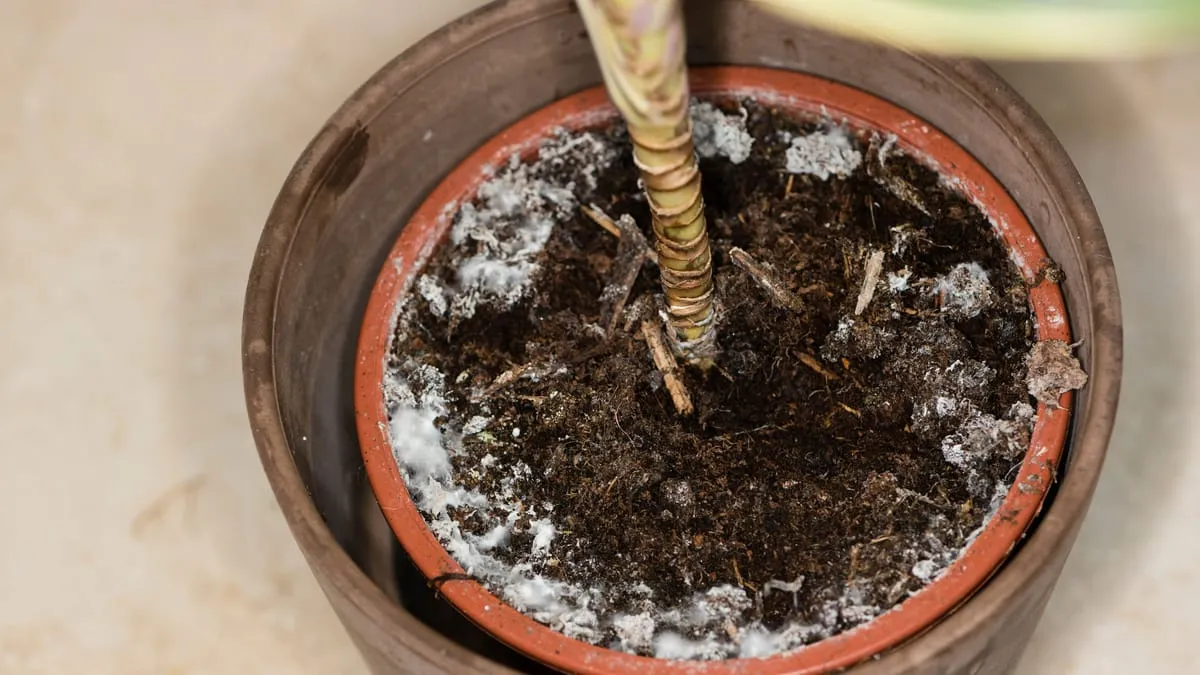
White patches on potting soil and tiny flies around houseplants can turn a relaxing hobby into a headache. These issues can pose health risks and harm plants. The right steps protect both you and your plants.
Spotting the Signs and What They Mean
You may see a white layer or crust on indoor potting soil, and small black flies often appear when you water. Those flies are fungus gnats; adults are mostly annoying, but their larvae eat plant roots, which can weaken or kill plants.
Mold on potting soil is a related concern and can be a health hazard. Act promptly: mold and fungus gnats can cause significant damage if ignored. If you spot either sign, address it.
Mold or Mineral Build-Up? How to Tell
White material on the soil isn’t always mold—hard tap water can leave lime deposits (mineral buildup). Try this test: gently scratch the deposit with a spoon or wooden stick. If it flakes off in crumbly pieces, it’s probably lime. If it’s soft, mold is more likely.
If it’s mold, act quickly. Move the plant outside, remove it from the pot, and clean the root ball thoroughly. Scrub the pot with a vinegar solution to remove lingering spores. Repot with fresh, high-quality potting soil and discard the old soil; spores can persist in the mix.
How to Deal With Fungus Gnats
Fungus gnats prefer moist soil for laying eggs and developing larvae. For a mild infestation, place yellow sticky traps at soil level to catch adults. Laying a thin layer of quartz sand on the soil surface can also block gnats from reaching the soil to lay eggs.
If the infestation is severe, replace all the potting soil to remove larvae and interrupt the gnat life cycle. Using high-quality potting soil helps too—better aeration and drainage make the environment less hospitable to gnats and mold.
Why Potting Soil Gets Moldy
Cheap potting mixes often contain compost, black peat, and wood fibers. Those materials hold moisture and break down quickly, creating conditions that favor mold. Lower manufacturing hygiene can also mean the soil contains mold spores or fungus gnat eggs when you buy it.
Higher-quality soils usually include drainage materials and structural components that prevent waterlogging and reduce the chance of mold growth.
Simple Steps to Prevent and Manage Problems
Beyond replacing contaminated soil, try these practical measures:
- Sprinkle cinnamon on the soil as a commonly suggested natural deterrent against mold and fungus gnats.
- Use pots with proper drainage and appropriate drainage materials to reduce waterlogging.
- Invest in good potting soil for better aeration and faster drying.
- Check all your indoor plants regularly to prevent spores and gnats from spreading through your collection.
Addressing the underlying causes and monitoring your plants reduces the chance of recurrence, letting you enjoy your houseplants with less concern.