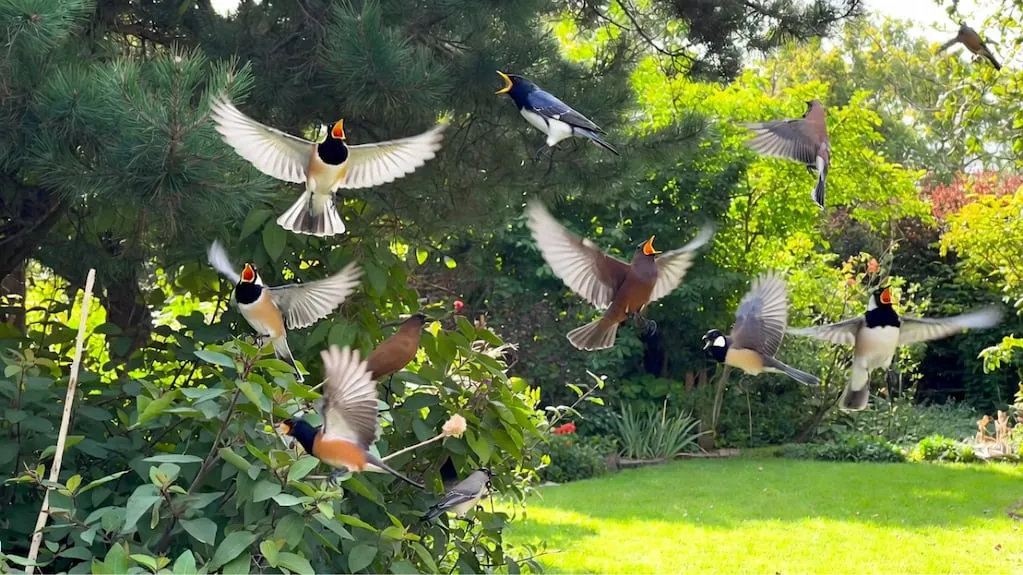
Why birds sing in daytime
Birds don’t only sing at dawn or “for no reason.” They sing throughout the day for specific purposes tied to their life cycles. First, they sing to mark their territory, signaling to other birds that they occupy a space. The melody you hear can also be a bird’s way to attract a mate, showing fitness through song. In addition, birdsong helps with communication with conspecifics (members of the same species), so individuals can stay in touch and coordinate things like feeding. Finally, birds use vocalizations to warn of potential dangers nearby.
When birds sing near human habitations, such as houses or gardens in urban and semi-urban areas, it can indicate a sense of safety. In places with human activity, sites where wildlife can thrive allow birds to continue natural behaviors.
What birdsong says about your home
Hearing birds around your house is a positive environmental sign. Birds are cautious, and they won’t sing freely where they feel threatened. Their presence usually indicates available vegetation, like trees, plants, and shrubs that provide food and shelter. That habitat supports a healthy environmental balance. Birds are effective bioindicators, meaning their behavior reflects the ecosystem’s overall health. When their songs fill the air, it often means the area isn’t overwhelmed by extreme noise pollution and supports a functioning natural environment.
Put simply, a place where birds sing supports both wildlife and people.
How birds affect human well-being
Beyond ecological signals, birdsong has effects on people’s emotional health. Although specific studies aren’t detailed here, various studies have shown that natural sounds can lift the spirits. The benefits linked to hearing birds sing include a reduction in stress and anxiety levels, improvement in mood, enhanced concentration and creativity, and an overall sense of calmness and connection to one’s surroundings.
In today’s fast-paced world of screens and city noise, birdsong offers a natural pause that helps people step away from the daily rush.
What birdsong means across cultures
In many cultures, birds and their songs carry symbolic meaning. Birdsong is often seen as a sign of renewal and new beginnings, marking times of change and growth. It is associated with harmony and emotional balance, bringing a feeling of peace and steadiness. Many people regard it as a good omen, a sign of positive energy and a moment to reflect and slow down. Birdsong can also be a bridge between the natural and spiritual worlds, encouraging mindfulness and a deeper appreciation for the life around us.
Birdsong is more than a daily occurrence; it is part of natural balance. Its presence reflects the connections among life, environment, and human well-being. Pausing to listen to the chorus of birds can enrich people’s experience of their surroundings. Encouraging habitats where birds can thrive helps maintain those benefits.