Why Grease Builds Up on Cabinets
Everyday cooking sends grease into the air, which mixes with dust and settles on cabinet surfaces. This sticky film gets worse on cabinets closest to the stove, where airborne grease is heavier. Once that oily layer sets, ordinary cleaners may struggle to remove it. Understanding how this happens helps you choose appropriate cleaning methods.
Baking Soda: A Simple, Mighty Grease Buster
Baking soda (also called Natron in some regions) is effective for cutting through stubborn grease on kitchen cabinets. It provides a mild abrasive action that helps dissolve and loosen grime. Mix baking soda with water to make a paste, spread it with a soft sponge, let it sit briefly, then wipe it away with a damp cloth. For stubborn stains, adding a squirt of dish soap increases cleaning power. Baking soda is efficient and has no special warnings for normal household use.
Vinegar’s Double Duty: Cleaning and Antibacterial Action
Vinegar is an effective option for dealing with kitchen grease. Mixed with warm water, it can remove grease and has antibacterial properties. Be careful, though; its acidity can harm sensitive surfaces or delicate materials (like unfinished wood or certain finishes). When used properly, a vinegar solution lifts greasy grime while also helping sanitize the area.
Lemon Juice: Fresh Scent With Cleaning Power
For a fresh scent, lemon juice mixed with water is a solid choice. This citrus solution is effective for dissolving grease and leaves behind a pleasant scent. As an alternative to baking soda and vinegar, lemon juice provides a natural, aromatic cleaning option.
Tools and How to Use Them
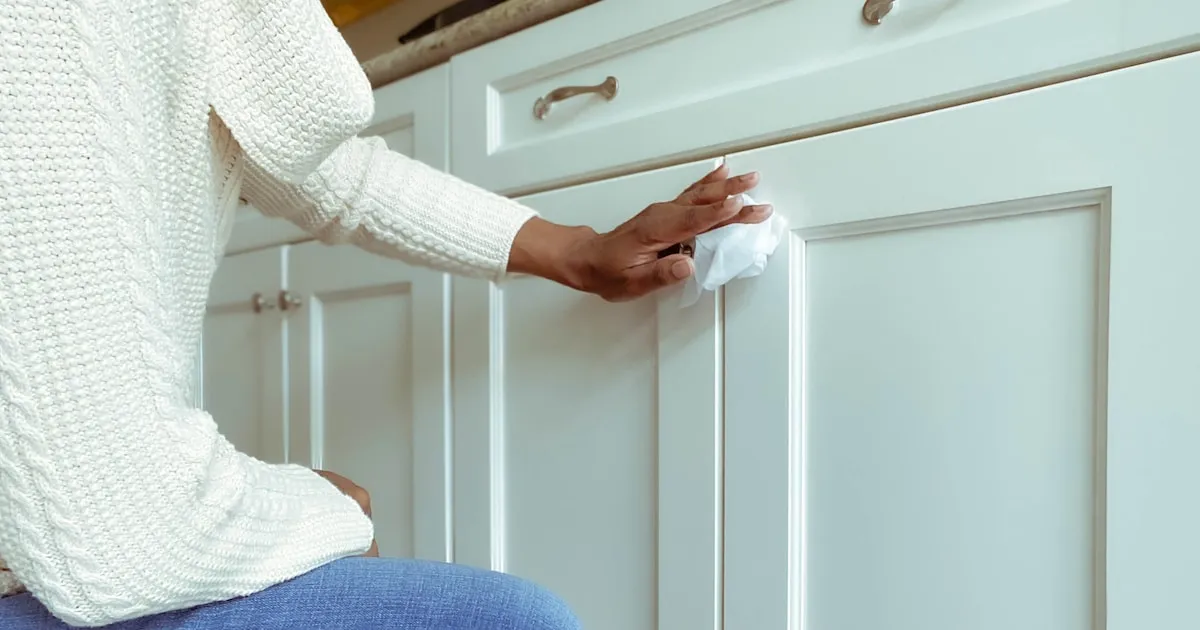
The right tools make a big difference. Have on hand a soft sponge, a damp cloth, and, importantly, a microfiber cloth for preventative cleaning. Use gentle scrubbing motions with baking soda paste, vinegar, or lemon solutions so you don’t damage the cabinet surfaces.
Tips to Keep Cabinets Grease-Free
Stopping grease from coming back is as important as removing it. Wiping cabinets with a damp microfiber cloth right after cooking or on a regular schedule can stop grime before it sticks. Also, applying a thin layer of cooking oil to cleaned surfaces can form a barrier that makes it harder for new dirt and grease to cling.
Affiliate Links: What You Need to Know
If you want more information or product recommendations, any links in the original text are clearly marked as affiliate links. These links can generate commissions for the publisher at no extra cost to you. A “More info” link is provided for readers who want further details about that arrangement.
You don’t need endless scrubbing or expensive cleaners to handle grease on kitchen cabinets. Baking soda, vinegar, and lemon juice are effective, more sustainable choices. Pair them with simple preventative habits and you’ll restore your cabinets’ shine and keep your kitchen a welcoming place for cooking.