How This Simple Mix Works
The cleaning duo is straightforward and effective and is used to supplement regular cleaning methods, not replace them. The main goal of this mix is to combat stubborn grease and stuck-on dirt, offering a flexible option for specific situations.
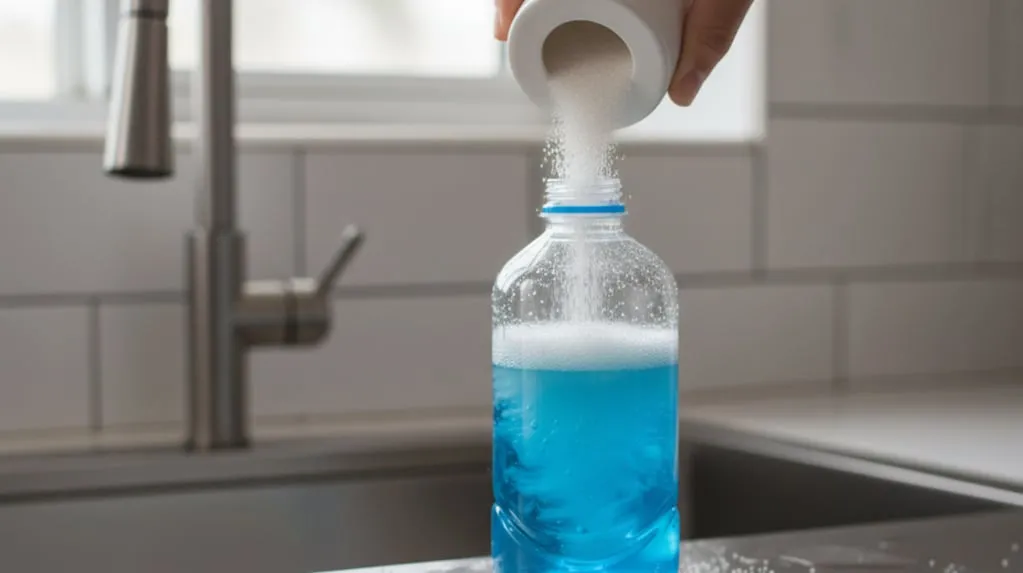
Sugar’s granular texture gives it a mild abrasive quality that helps scrub and loosen dirt without the harshness of stronger abrasives. Detergent breaks down grease and dissolves oily residues. Together they form a paste that combines scrubbing action and degreasing power to tackle tough cleaning jobs.
How to Use the Mixture
This sugar-detergent paste has several practical uses around the home. It’s especially good for cleaning pots with burnt and stuck-on residues. Resistant surfaces that build up grime over time also benefit, since the paste helps lift dirt without a lot of elbow grease. It can remove stubborn stains, provided the surface isn’t too sensitive or delicate.
Making the mixture is simple. Start by adding 2 tablespoons of liquid detergent into a container. Then add 1 tablespoon of sugar. Stir well until you get a cohesive mixture. It’s easy enough to make regularly, but keep in mind the paste should be replaced every 1,2 days to keep it effective.
Safety Tips and Limits
There are important precautions to follow. Don’t use this mixture on delicate surfaces; the sugar’s granules can scratch. Avoid places like unprotected wood or other sensitive areas to prevent damage. The paste works best on pots, resistant surfaces (hard, non-porous surfaces), and spots that tend to collect a lot of dirt, which makes it a useful supplementary cleaner.
As part of routine home care, remember that this sugar-detergent mix is an add-on, not a substitute for stronger chemical cleaners when those are needed. Use it as part of a broader cleaning routine to address specific stubborn situations, rather than relying on it for everything.
The sugar and detergent mixture is a simple cleaning option. For anyone dealing with dirt and grime, it complements standard cleaners. By knowing how it works, where to use it, and what to avoid, homeowners can use it effectively; be mindful of surface safety and regular maintenance so this trick remains useful.