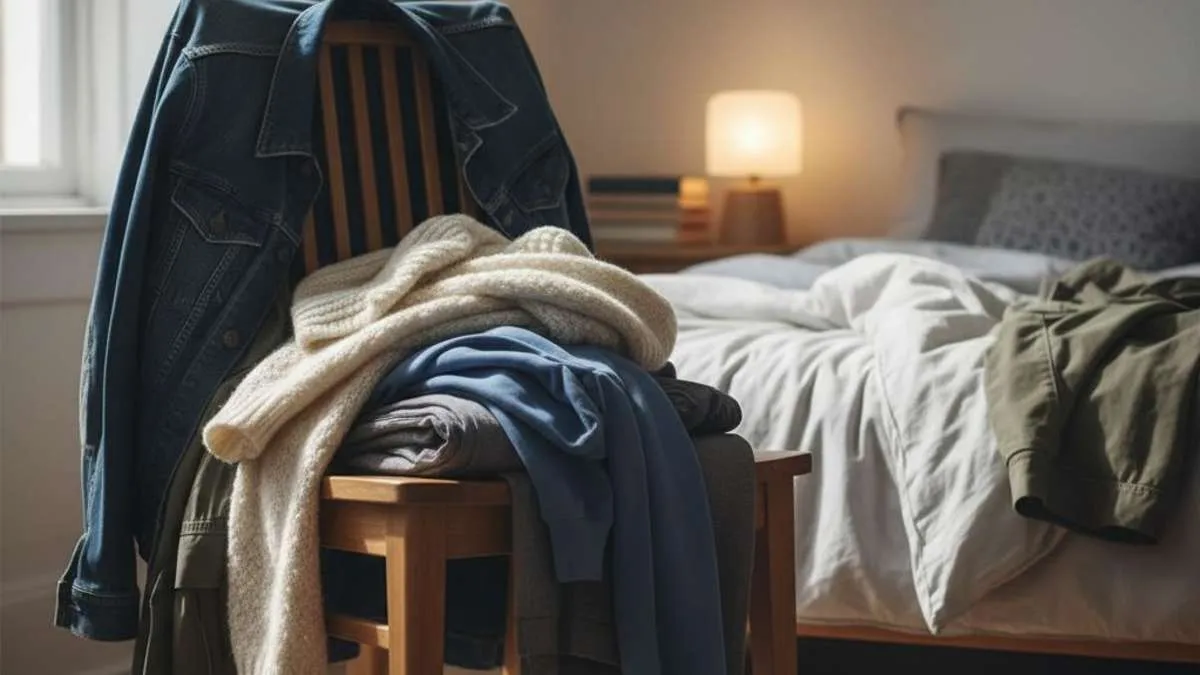
That Chair Pile: A Typical Bedroom Scene
A lot of people come home tired and drop items like jackets, sweaters, or pants on a bedroom chair. That chair often turns into a “collection spot” or an “intermediate zone,” where things get left “cross and crooked.” Other stuff, pens and books, can end up there too. Some folks use alternatives like an open clothes rack or specially designated baskets, but many still go with the familiar chair.
This isn’t rare or a sign of inherent laziness or messiness; it’s a common pattern in many households.
What Psychology Says About Piling Clothes
Psychologists link this piling to several mental processes. It reflects an inner conflict between a desire for order and decision fatigue after a long day. The brain prioritizes larger tasks over small chores like putting clothes away, and low energy makes postponing tidying a natural choice. Leaving clothes on a chair can mark the transition from work mode to downtime, a simple ritual.
Beyond energy management, piling clothes relates to broader personality traits: acceptance of imperfection, conserving limited energy, and preferring authenticity over strict neatness. People who are more flexible tend to be relaxed about everyday chaos and more comfortable being themselves.
Personality Traits Linked to Chair-Clothes Piles
People who stack clothes on a chair often display creativity, flexibility, and optimism. They may appear authentic and pragmatic. The research also notes that, in some cases, these behaviors can appear alongside narcissistic tendencies, as studied by Harvard psychologists.
Creative and abstract thinkers often put ideas and projects ahead of keeping their space perfectly tidy. The study suggests these people are open-minded, adaptable, and willing to overlook small messes in favor of intellectual pursuits.
How to Tame the Habit (Without Going Overboard)
If you want to change this habit, psychologists recommend gentle, progressive changes. Build a system that fits your personality and add organizing steps slowly. Simple fixes like an open clothes rack or baskets make it easy to organize in small steps without losing spontaneity.
Choosing to tidy up does more than straighten a room; it can affect your overall sense of wellbeing. Recognizing your natural rhythms, seeing personal habits as strengths, and valuing authenticity can turn apparent disorder into something functional.
Understanding these everyday behaviors goes beyond quick judgment; they play a role in personal and psychological expression, much like how small gestures can reflect deeper personality traits.