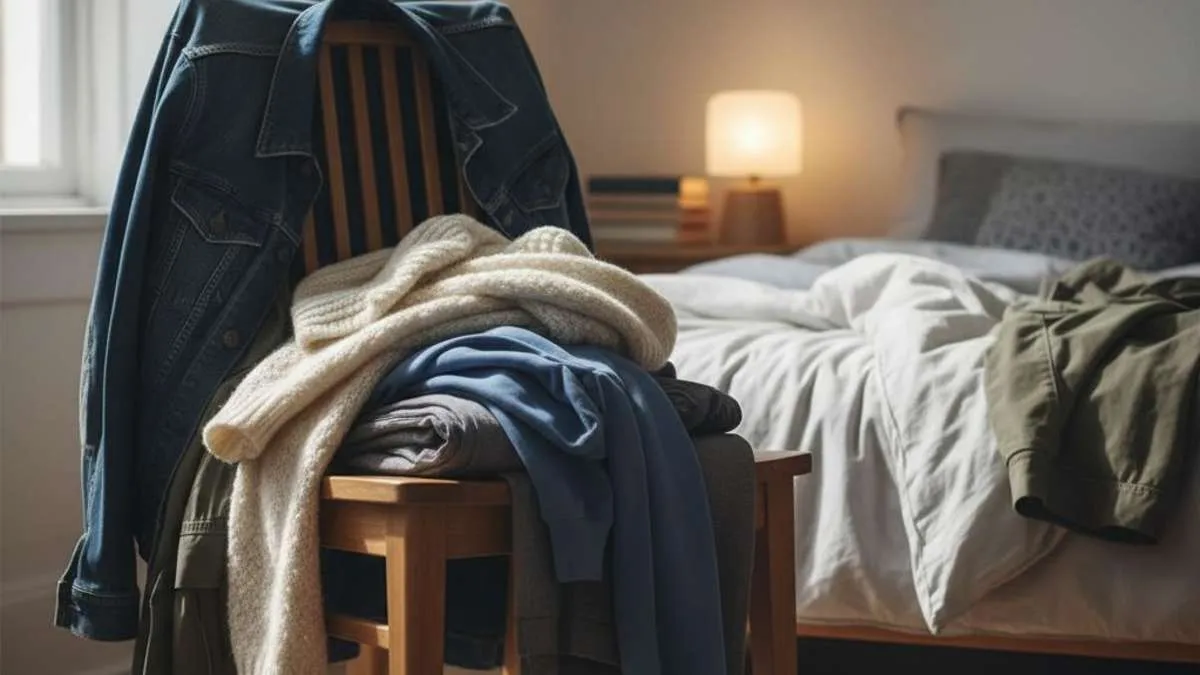
What’s Going On With That Cluttered Chair?
Research drawing on psychologists’ views, including work at Harvard, finds a pattern. After a busy day people often experience decision fatigue, a form of mental tiredness from making choices, so they postpone small tasks like putting away clothes in favor of more urgent matters. That is a practical choice: prioritizing larger tasks over small chores.
For some, the postponement isn’t just avoidance; it becomes an unconscious ritual, a middle ground between order and disorder. Dropping clothes on a chair can mark the transition from work to downtime, reflecting a trade-off between freedom and structure.
Psychology also notes that how someone balances order and routine can reveal aspects of their character. This habit isn’t simply forgetfulness or laziness; for many, it is a ritual that may reflect a focus on ideas and projects rather than immediate, material details.
How Traits Show Up in Everyday Habits
Psychologists have linked the chair-full-of-clothes habit to several personality traits. People who often leave clothes on a chair tend to show creativity, flexibility, and optimism. The mess on the chair can be a sign of abstract thinking, where big ideas matter more than keeping the space tidy.
Flexible people who drape a jacket over a chair instead of putting it away often value authenticity and an adaptive lifestyle. They accept imperfection and treat their surroundings as an expression of personality rather than a problem to fix.
Optimists tend to assume there will be time later to tidy up. That outlook aligns with a practical approach to energy management: choosing where to spend effort now.
Some sources, including baden24.de, suggest that astrology (zodiac signs) could influence a person’s tendency toward tidiness or clutter.
Simple Ways to Manage Your Daily Routines
If leaving clothes on a chair reflects something about your personality but you want more balance between spontaneity and order, experts recommend gentle, gradual changes instead of dramatic fixes. Practical tools like an open clothes rack or designated baskets can make storage easier while fitting your habits.
Finding the right balance between freedom and structure lets you build a system that suits you. Small adjustments over time and simple, practical solutions can make staying organized more manageable.
What It Says About Your Broader Behavior Patterns
The habit of piling clothes on a chair ties into larger questions in behavioral science. It isn’t just a domestic quirk; it can reflect broader life patterns and how your environment mirrors psychological tendencies. Those observations can help examine parts of personality and suggest practical ways to handle everyday routines.
Understanding why you make small choices, like tossing clothes on a chair, can prompt reflection on personal traits and encourage change. What seems minor can offer insight into behavior and a chance for self-reflection and adjustment.