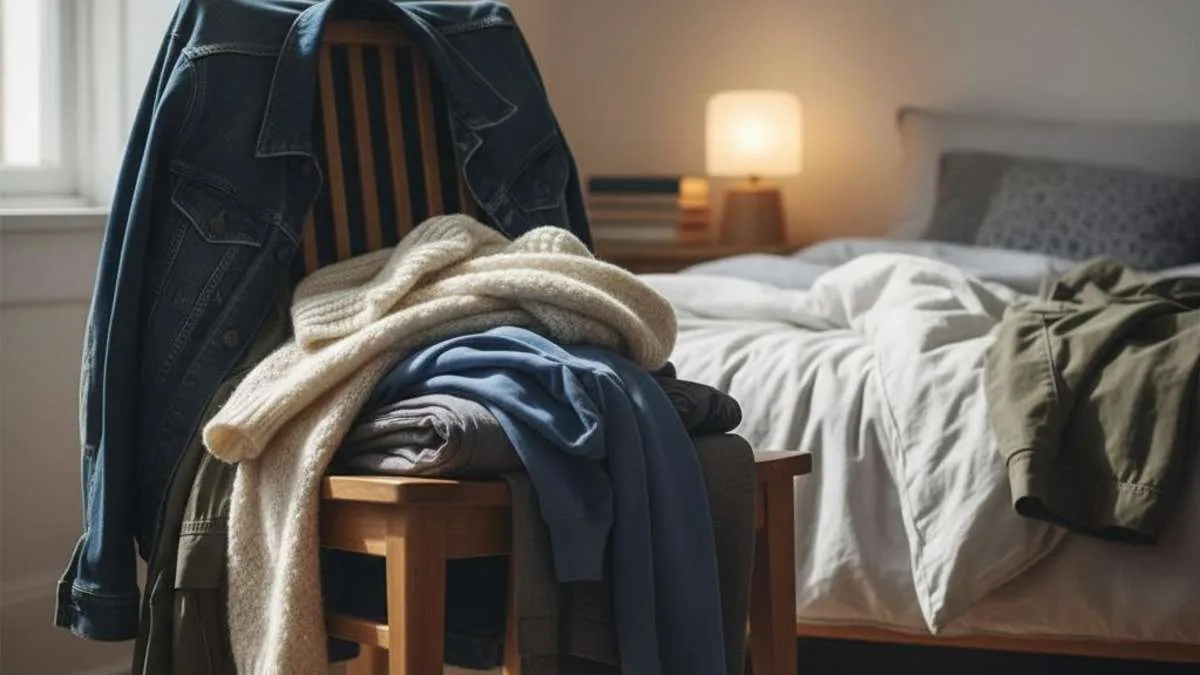
Stacking Clothes: More Than Just a Mess
On the surface, tossing clothes on a chair looks like skipping a quick cleanup. Behavioral researchers study everyday clutter, from jackets, sweaters, and trousers to other tossed items, to understand what it may indicate about someone’s inner life. Leaving things for later after a long day usually isn’t random. It often reflects a tension between wanting order and dealing with decision fatigue (the tiredness that comes from making too many choices).
A bedroom chair piled with clothes can act as an “intermediate zone” between mess and neatness. The habit can serve as a small transition ritual, marking the switch from a busy day to downtime. When energy is low at the end of the day, people often choose rest over tidying, which can suggest a tendency to prioritize abstract or mental activities over material order.
What It Might Reveal About Your Personality
Several personality traits often appear alongside the habit of using a chair as temporary storage. Creativity is commonly associated with disorder; people who drape clothes over chairs may focus more on ideas and projects than on minor material details (a trait often seen in abstract thinkers).
Flexibility is another link. Those who accept some imperfection and prefer to live authentically may be more comfortable leaving clothes out instead of enforcing strict order. Optimists may treat untidiness as temporary, expecting they’ll have time later to deal with it and trusting their ability to manage tasks afterward.
There is also a subtle connection to narcissism in some interpretations. While not a direct link, references by Harvard psychologists note how everyday actions, like organizing or not organizing personal spaces, can carry layered meanings about a person.
Practical Ways to Tidy Up Without Losing Yourself
For people who find it hard to keep things spotless, practical advice recommends making gentle, gradual changes that fit personal rhythms. Set up simple systems that add a bit of order without eliminating spontaneity or authenticity, for example using an open clothes rack or special baskets to provide structure while still allowing freedom.
Tackling tidiness in small, manageable steps often works best. Because psychologists and behavioral researchers view handling objects as related to mental states, low-effort solutions are reasonable for balancing a livable space with everyday energy limits.
Some people also look to astrology for clues, believing star signs can influence tidiness. According to baden24.de, certain zodiac signs make cohabitation harder, suggesting astrology might affect organizational habits.
Everyday habits, even how you arrange clothes, relate to aspects of human psychology. Reexamining these small routines can help people understand themselves better, support personal well-being, and reveal subconscious choices that shape daily life. Considering these connections may inform self-management and how personality relates to using personal space.