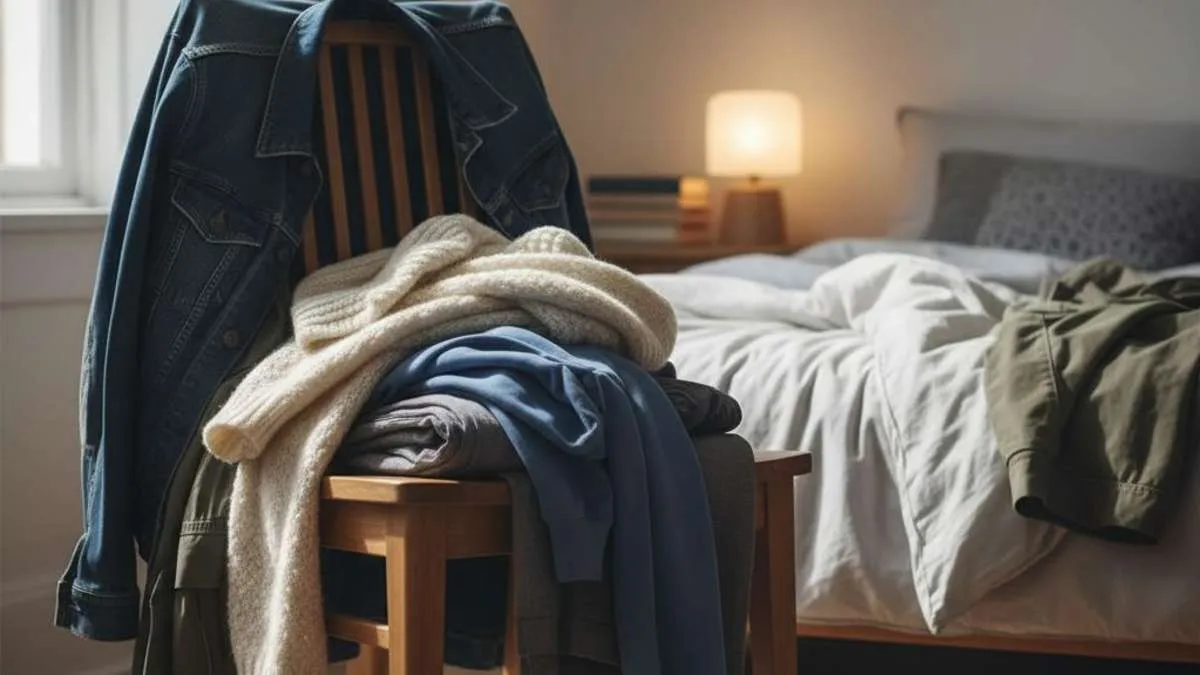
What Your Chair Says About You
In many homes, a bedroom chair becomes a catch-all for clothes. Jackets, sweaters, and pants end up there after people come in from their day. That spot isn’t totally chaotic or perfectly tidy; it is more of a transition zone between work and relaxation. Behavioral researchers and psychologists say this transitional space reflects a tension between structure and freedom.
Using the chair this way is often a conscious choice, a middle ground between spontaneity and routine. It can signal the transition from daytime responsibilities to evening downtime. People might be too tired to put things away right away, choosing relaxation over immediate neatness. For many, this routine is part of daily life and shaped by subconscious decision-making. Decision fatigue, when willpower is depleted and the mind prioritizes larger tasks, can push small chores like tidying further down the to-do list.
What’s Going On Inside: Personality and Psychology
There is psychological logic behind this habit: it balances a desire for order with limited mental energy. Stacking clothes isn’t only procrastination; it can reflect emotional and energy needs for a smoother transition into the evening. How we treat everyday items like clothing can mirror our inner state and affect overall well-being.
Certain personality types tend to do this more. Creative, abstract thinkers who prioritize projects and ideas over tidying are more likely to use the chair as a makeshift wardrobe. People who are flexible may accept the mess, valuing authenticity over strict neatness. Optimists may assume they’ll handle it later, treating the pile as confidence in their ability to deal with it.
Simple Fixes That Actually Work
You don’t need a major life reset to change this habit. Small, gradual tweaks usually work best and fit different personality styles. Instead of forcing a rigid cleaning routine, practical solutions like open clothes racks or dedicated baskets can reduce clutter while respecting natural tendencies.
How we manage personal space reflects both conscious and unconscious choices. Some people will want to break the habit; others will accept it as matching their routines. As modern life fills rooms with pens, books, and clothes, strict neatness isn’t always practical. Letting certain routines continue can provide insight into personal habits and preferences.