How It Grew So Fast
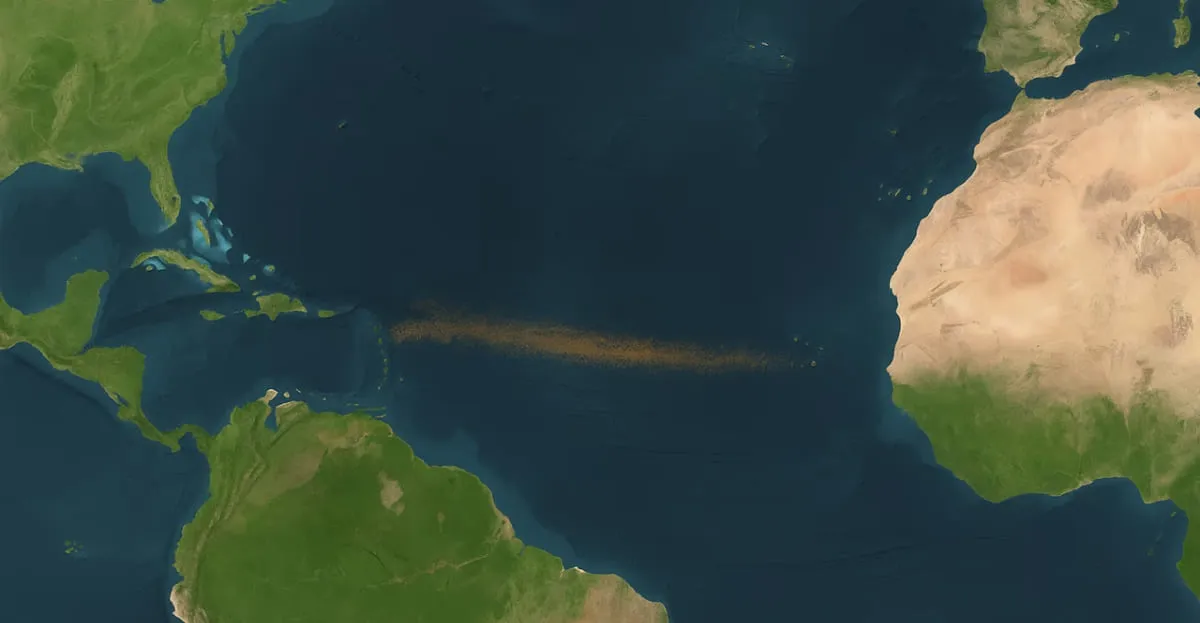
The Sargasso Sea, long called a “blue desert” because its waters are low in nutrients, used to be the main home for pelagic sargassum. Over the last few decades, however, the situation changed: the Atlantic Great Sargassum Belt did not exist 15 years ago. A major study in Harmful Algae, led by researchers at the Harbor Branch Oceanographic Institute at Florida Atlantic University, examined 40 years of satellite data plus field observations and chemical tests. The paper tracked the belt’s emergence, acceleration, and widening over time.
The first large bloom appeared in 2011, and since then only 2013 did not show intensification. By 2025, the belt reached a record length of 5,500 miles, which is more than twice the width of the continental United States. In May of the previous year, satellites detected about 37.5 million metric tons of sargassum, indicating the scale of the event. Part of the growth is due to higher nutrient input and a faster biomass doubling time, especially in nutrient-rich waters, where the sargassum can double in just 11 days.
Where the Nutrients Come From and How It Moves
Scientists link the sargassum surge largely to additional nutrients—mainly nitrogen and phosphorus—coming from land. Those nutrients originate in agricultural runoff, wastewater discharge, and atmospheric deposits. The Amazon River also contributes during flood periods, flushing large nutrient loads into the Atlantic (droughts, by contrast, tend to slow the blooms).
Ocean currents then distribute the floating mats. The Loop Current and the Gulf Stream move the sargassum, so what began as a local phenomenon has been carried into a much broader zone. Observations dating back to 2004-2005 in the Gulf of Mexico show how long this process has been underway.
Effects on Nature and Local Economies
On the open ocean, floating sargassum provides habitat, NOAA (National Oceanic and Atmospheric Administration) reports it shelters more than 100 species, including fish, invertebrates, and sea turtles. When large amounts wash ashore, the effects change. As the seaweed rots it releases gases such as hydrogen sulfide and methane, which are toxic and unpleasant. Beaches become smothered, coral reefs can suffer low-oxygen dead zones, and those greenhouse gas emissions may have broader climate implications.
There are economic impacts as well. Coastal towns that depend on tourism often face lost income and heavy cleanup bills. In one documented case, sargassum built up enough to force a Florida nuclear power plant to shut down in 1991.
What Scientists Say Needs To Be Done
Researchers worldwide call for stepped-up efforts to address the issue. They recommend better international monitoring, improved forecasting models, and long-term reductions in nutrient runoff. Eutrophication is moving from a coastal problem to an open-ocean issue, and rising global temperatures combined with continued nutrient inputs from land suggest other regions could be affected.
As the Atlantic Great Sargassum Belt continues to expand, calls for action are increasing. The phenomenon shows how human activities and ocean systems interact, and it raises questions about nutrient management and climate change on a global scale.